

Meet the team running 1,000 hours of VR a year
Beverley has spent most of her professional life in aged care. For the past 12 months, VR in aged care has become a central part of how her team at MACG’s Parkdale home connects with residents every single day. Sixteen years with Medical and Aged Care Group. Thirteen of those as a carer at Casey Manor in Narre Warren South. Today she leads the wellbeing team at Parkdale Aged Care as lifestyle manager, running eight to ten VR sessions a day.
“We always have them out ready to go,” she says. “They’re charged overnight, and as soon as we start in the morning, we’re off.”
Beverley and her team at Parkdale have delivered over 1,000 hours of VR in the past 12 months. The headsets can run with four residents at once, or one-to-one. The setup, she says, takes a couple of hours to learn. After that, it becomes part of how the day runs.
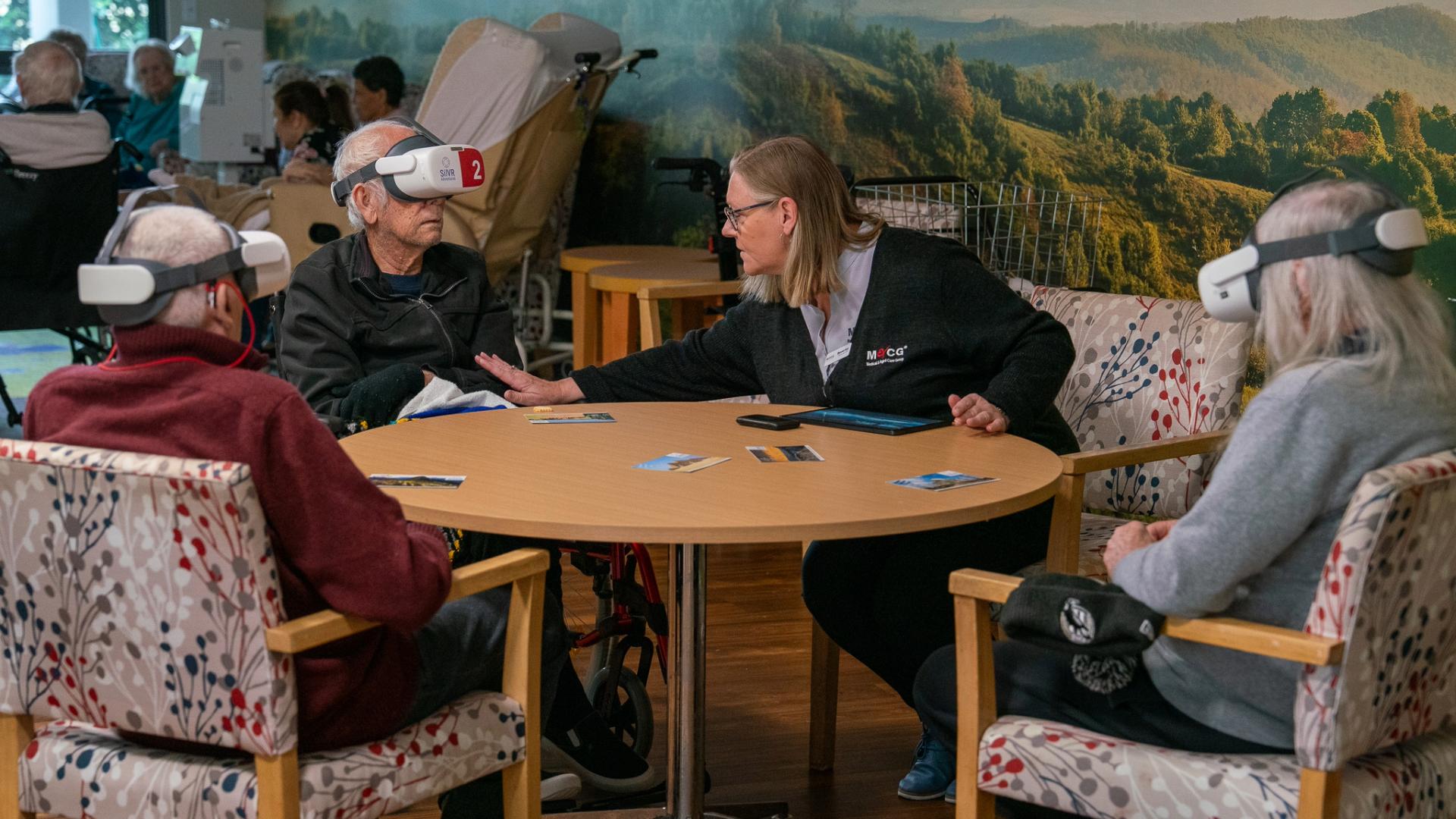
What VR in aged care actually does for residents
What she describes is not a novelty. It is something more considered.
The VR sessions help residents with memory recognition, lift mood, and reduce isolation. Residents revisit places that shaped them: childhood neighbourhoods, cultural landmarks, the streets where they grew up. For residents from diverse backgrounds, that connection to place and identity carries particular weight.
“You can Google where somebody got married, where they went to school, where they used to live, where they used to go shopping. And it zooms in on that for them,” Beverley explains.
“They can go back to their country where they were born, where they grew up. It’s lovely”
The reach of the tool extends beyond the residents themselves. Family members get involved. Staff across the home have embraced it. “It supports calm and does far more than entertain,” Beverley says, “by activating identity, memory and storytelling.”
From activity counts to genuine engagement
That phrase, activating identity, memory and storytelling, says something important about where engagement in aged care is heading.
For years, engagement programs have been measured by activity counts. Sessions run. Residents attending. Hours logged. What Beverley describes at Parkdale is something different: engagement that is personal, consistent, and connected to who each resident actually is.
MACG’s approach has not gone unnoticed. Their partnership with SilVR Adventures was recognised as a winner at the 2026 Eldercare Innovation of the Year Awards, a signal that the sector is beginning to look at engagement through a different lens.
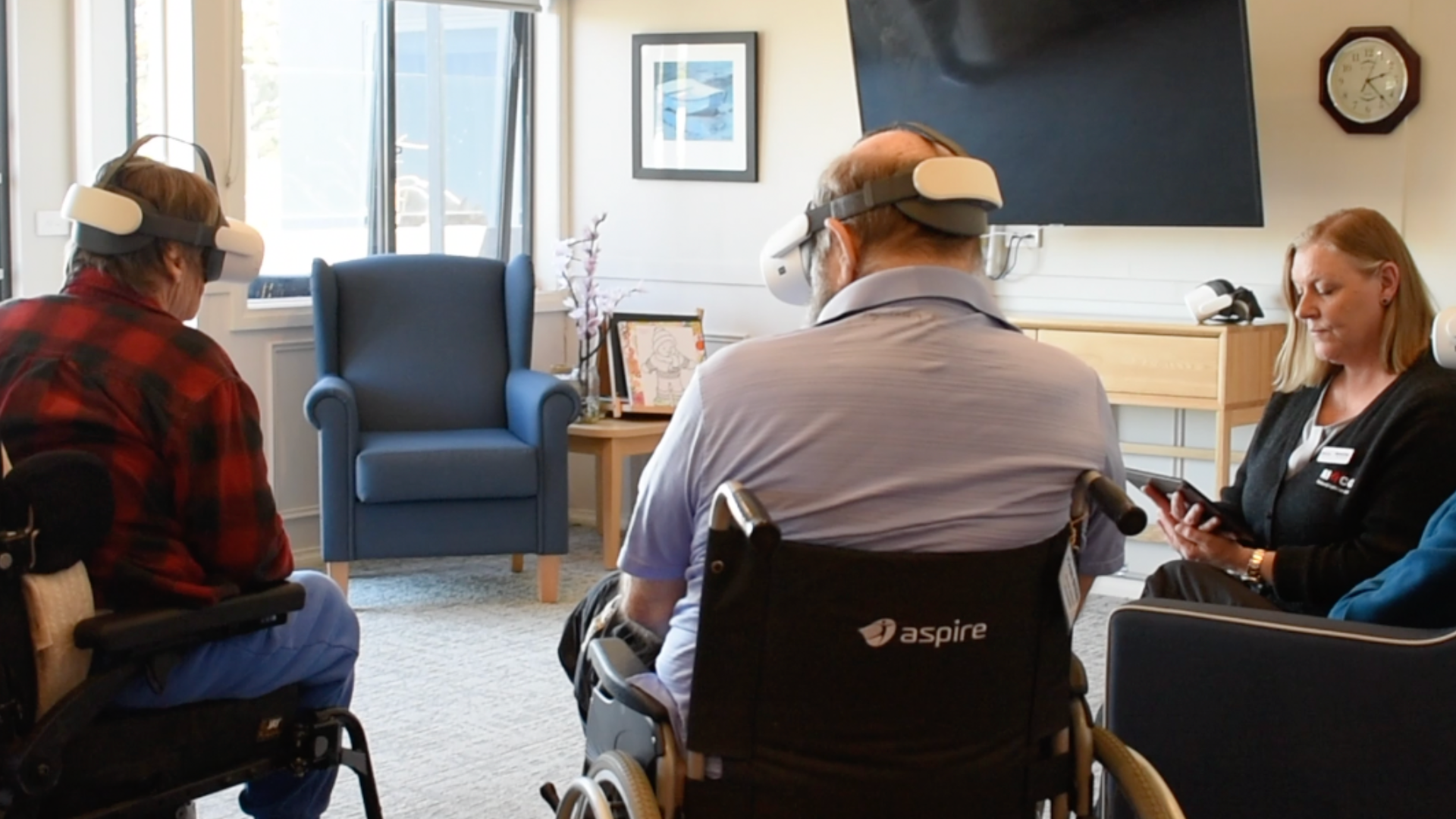
Residents enjoying a VR session at MACG Parkdale
The gap that VR in aged care exposes
The question that follows naturally from Beverley’s experience is one that many providers are starting to ask.
What happens when the person who built this, who knows which resident responds to what and holds all of that knowledge, moves on? What happens when a new staff member starts their first shift and needs to deliver a meaningful session without a handover document that covers any of this?
Workforce turnover is not a new problem in aged care. But its effect on engagement programs has been underexamined. When the knowledge lives inside one person, the program is as fragile as that person’s tenure.
It is the kind of structural gap that does not show up in activity logs. It only becomes visible when something goes wrong.
“These experiences spark conversation, storytelling, and connection,” Beverly says. “Sometimes it’s emotional, but it’s always meaningful.”
Feedback from Resident Lizzy at MACG Parkdale
Building systems that outlast any one person
Providers who are thinking seriously about this are moving toward systems that capture what Beverley holds in her head and make it accessible to everyone on the team.
MACG is among the first providers to adopt SilVR Pathways, a platform designed to do exactly that. It builds resident profiles, generates personalised session plans, and gives any staff member the context they need to deliver a meaningful session, regardless of experience or shift.
The goal is not to replace the Beverleys of the sector. It is to make sure that what they know does not walk out the door with them.
Beverley is clear about why this work matters.
“My main aim is to connect with every resident as much as possible,” she says. “Parkdale is their home and they so deserve that time given with daily interaction.”
That instinct is exactly right. The question for the sector is whether instinct alone — however genuine — is still sufficient. Or whether the providers who are getting ahead are the ones pairing that care with the systems to sustain it.
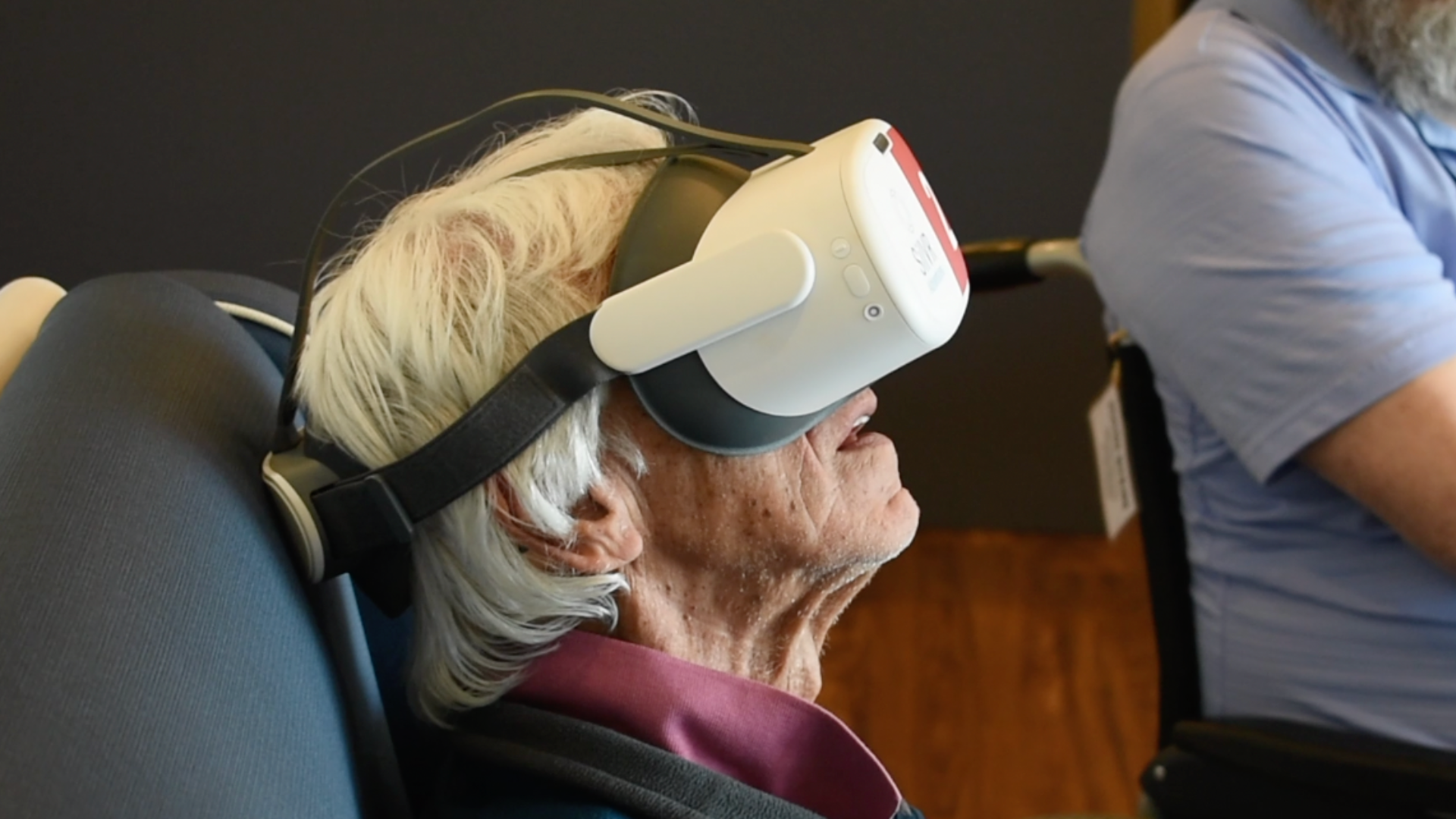
VR has proved transformative at MACG 💙🥽
This article first appeared in Australian Ageing Agenda, Autumn 2026. Interview by Jodie Wolf.
